NEC 2026 Healthcare Facility Loads: New Receptacle Demand Factors

NEC 2026 rewrites receptacle demand factors for healthcare facilities. See what changed from NEC 2023, and why circuit count now calculates specific equipment.
NEC 2026 rewrites receptacle demand factors for healthcare facilities. See what changed from NEC 2023, and why circuit count now calculates specific equipment.
NEC 2026 introduces key changes to EV load calculations for electrical engineers. Learn how Power Control Systems can reduce calculated loads and what these updates mean for your designs.
AEC skeptics dismissed CAD, then BIM. Both times, they were wrong. Here is why AI is following the same curve as these earlier engineering and design technologies, and why simply dismissing it is a costly bet.
Revit 2027 has been released, and we explore the software’s new electrical features and tools. See what’s new or missing and how electrical engineers can get the most from the new version.
AI isn’t taking over MEP engineering, but it is changing the day-to-day work. Learn how AI supports layout, coordination, and efficiency, while engineers remain essential for judgment, optimization, and real-world problem solving.
In this episode of the Electrical Building Design Show, we’re joined by Kevin Lawson, PE, founder of Ripple, to talk about HVAC automation, AI in Revit, and why mechanical design often drives the rest of the building. We cut through the hype to discuss what’s working today, what’s not, and what automation means for the future of MEP.
What happens when thousands of engineers, designers, and innovators gather to imagine what’s next for building design? At Autodesk University, the conversations go beyond flashy tech, revealing how AI, automation, and smarter BIM practices, and more are quietly transforming the way we work.
Wire sizing is one of the most critical aspects of electrical design. This post looks at the new wire sizing functionality in Revit 2026 versus how wire sizing works inside ElectroBIM to see which better handles real-world conditions.
If you have ever felt the strain of hiring and training, or if you are an early-career engineer wondering how to bridge the gap between school and practice, this conversation is one you do not want to miss.
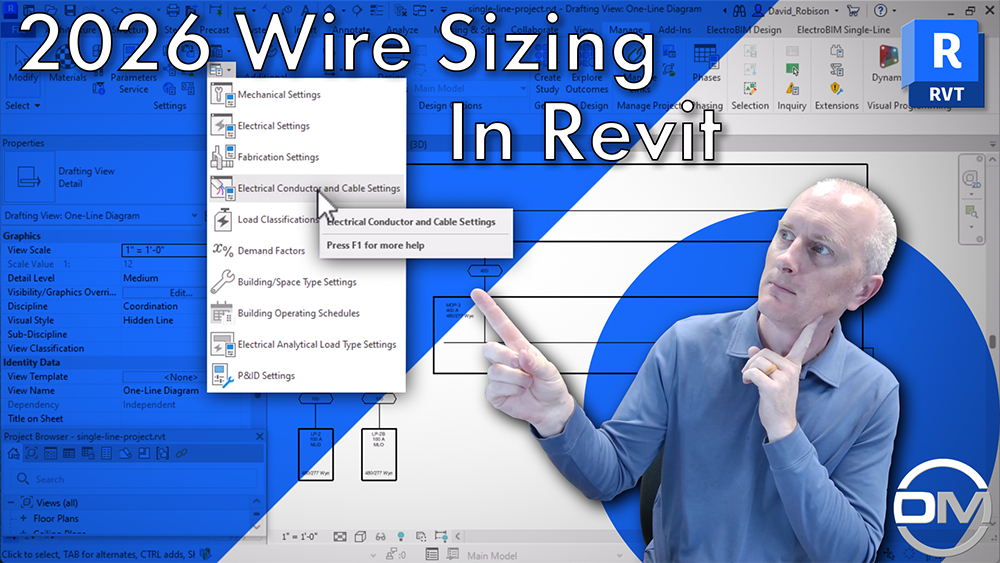
Revit 2026 introduces a long-overdue transformation to wire sizing, giving electrical designers a more flexible, globally adaptable framework for defining conductors and cables. While this foundational shift is a major step forward, is it enough?